'Voter roll deletion shouldn't take away services': Supreme Court seeks replies on Bengal SIR
.gif)

Download Mobile App 






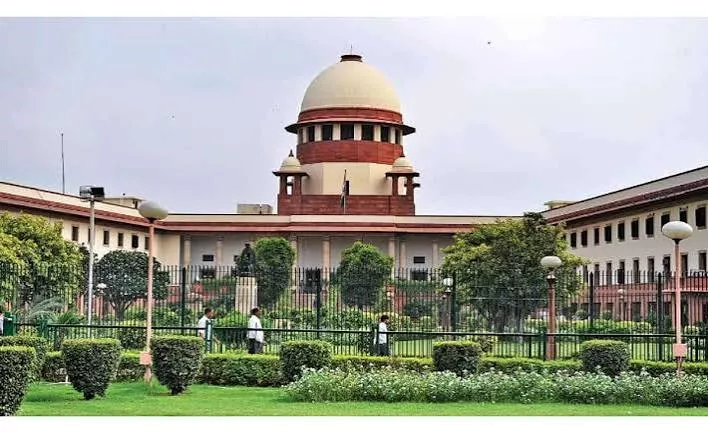
The Supreme Court on Friday sought responses from the Election Commission of India (ECI), the Chief Electoral Officer of West Bengal and the state government over concerns related to the appellate process under the Special Intensive Revision (SIR) of electoral rolls. The court examined issues including nearly 34 lakh pending appeals, delays in disposal, lack of transparency in tribunal procedures and allegations that people whose names were deleted from electoral rolls were also being denied government welfare benefits.
A Bench comprising Chief Justice of India Surya Kant and Justices Joymalya Bagchi and V Mohana issued notices on a Public Interest Litigation filed by Prasenjit Bose, Chairperson of the SIR Committee of the West Bengal Pradesh Congress Committee. The petition seeks directions to streamline the appellate process, publish the Standard Operating Procedure (SOP) followed by appellate tribunals, disclose relevant data and establish a time-bound mechanism for deciding pending appeals.
During the hearing, Senior Advocate Gopal Sankaranarayanan, appearing for the petitioner, informed the court that around 34 lakh appeals were pending before the appellate tribunals, while only about 38,000 had been heard. He argued that nearly 70 percent of the appeals decided so far had been allowed, indicating the need for a minimum documentary threshold to expedite the disposal of cases. The petitioner also raised concerns over the absence of a publicly available SOP, lack of an official platform for uploading tribunal orders and vacancies after the resignation of two judges from the 19-member tribunal system.
The Bench reiterated that deletion from the electoral roll does not determine a person's citizenship status. Justice Joymalya Bagchi observed that if the ECI has doubts regarding citizenship, the matter must be referred to the Ministry of Home Affairs under the provisions of the Citizenship Act. The court emphasised that the Election Commission is not the authority to decide citizenship and clarified that removal from the electoral roll does not automatically result in the loss of citizenship.
The petitioner further argued that deletion from electoral rolls should not lead to the withdrawal of government welfare schemes while appeals remain pending. Concerns were raised over reports that beneficiaries had allegedly lost access to services such as ration distribution, women's pension schemes and other welfare programmes following deletion from voter rolls. The Supreme Court observed that while voting rights may remain affected until appeals are decided, other government services should not be withdrawn solely on that basis. The court has sought replies from the ECI, the Chief Electoral Officer of West Bengal and the state government on the issues raised in the petition.

'Voter roll deletion shouldn't take away services': Supreme Court seeks replies on Bengal SIR

Bulldozers coming at night! Police visit roadside stalls in Burrabazar over "plastic sheets"


.webp)

 West Bengal
 Bihar
Bihar Uttar Pradesh
 Jharkhand